Which crypto coins are getting ready to explode according to Altcoin Daily?
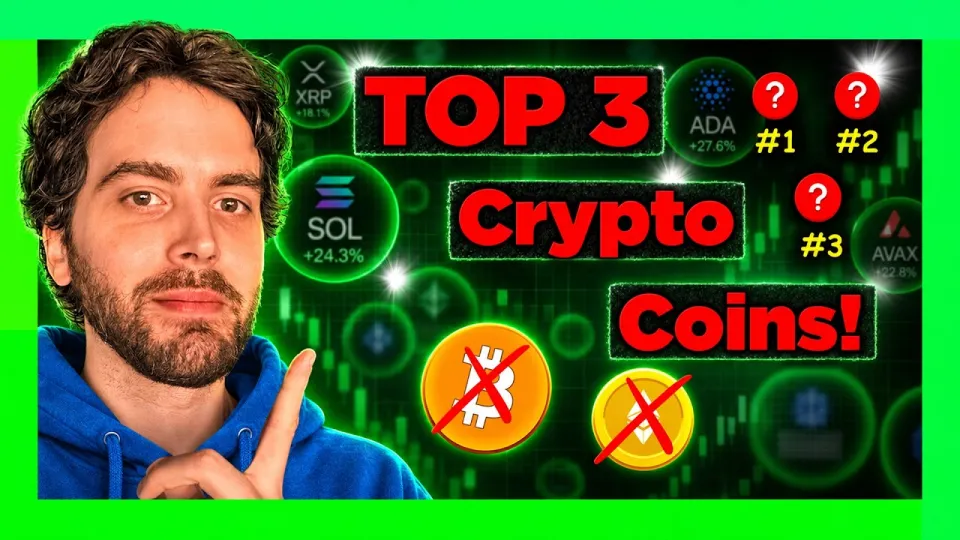
Video: These 3 Crypto Coins Are Getting Ready To EXPLODE!?
Want articles like this for your own video to promote it on YouTube and Google? Order them through the Telegram bot @sat_sit_bot. It writes articles around your video, embeds the video and publishes them on popular niche websites (no ads). Free trial — 50 articles.
· based on the channel Altcoin Daily
Key takeaways
- Altcoin Daily's breakdown highlights Solana, Near Protocol and Hyperliquid as the three coins with the strongest setups.
- Solana is framed as the blue-chip altcoin, with Backpack and ecosystem activity cited as demand drivers.
- Near Protocol is pitched as the momentum play, with a $15 per coin target floated by viewers for this cycle.
- Hyperliquid draws debate over gas costs, with Arbitrum users arguing it is the cheaper option for fees.
- Zcash and Midnight (NIGHT) come up as privacy-sector alternatives that some viewers rate above Near.
Altcoin Daily's latest breakdown picks three crypto coins it says are getting ready to explode: Solana, Near Protocol and Hyperliquid. The case rests on Solana's blue-chip status and ecosystem activity, Near's momentum narrative and Hyperliquid's role as a high-volume perpetuals venue, with the channel's audience tracking the same names on X via Altcoin Daily's profile. Each pick has a clear catalyst and a clear risk, and the sections below separate the two.
Why Solana is the blue-chip pick among crypto coins
Solana is treated as the least speculative of the three because it already carries blue-chip status among altcoins. The argument is structural rather than promotional: Solana combines fast settlement, low fees and a consumer-facing app ecosystem, and that combination keeps attracting both developers and retail flow.
The specific catalysts named in the discussion are ecosystem products rather than protocol upgrades. Backpack, the wallet and exchange built around Solana, is repeatedly raised as a demand driver because it funnels users straight into Solana-based assets. Community sentiment mirrors that: Solana is routinely ranked as the number two holding after Bitcoin, and the phrase "better call SOL" has become shorthand for confidence in the chain.
The bear case is equally simple. Solana is a large-cap asset, so a doubling requires far more capital than a small-cap move, and it remains correlated to Bitcoin's direction. If Bitcoin stalls, Solana tends to stall with it, which limits how explosive the upside can be in a single leg.
Near Protocol and the momentum trade
Near Protocol is the momentum name in the lineup, pitched as the hot coin of the moment rather than a long-term infrastructure bet. The bull case centers on attention: when capital rotates into mid-caps, Near's combination of sharding-based scalability and AI-adjacent positioning makes it an easy narrative to buy.
Price expectations among traders are aggressive. A $15 per coin target for this cycle has been floated in the discussion, which implies a multi-fold move from typical levels and would put Near's market capitalization in a very different bracket. That kind of target only makes sense if the broader altcoin market enters a sustained uptrend, so treat it as a scenario rather than a forecast.
Near also earns a defensive reputation with some holders who describe it as having protected their portfolios during drawdowns, largely because it held key support levels when smaller alts broke down. That resilience is a real data point, but it does not guarantee the upside target will be met.
Hyperliquid and the fee debate around perpetuals
Hyperliquid is the third pick and the most controversial, because its value proposition is a trading venue rather than a general-purpose blockchain. It has built a reputation for deep perpetual futures liquidity and a user experience that rivals centralized exchanges, which is why traders watch its token closely.
The main pushback concerns cost. Users who trade on Arbitrum argue that Arbitrum is cheaper than Hyperliquid once gas fees are counted, and that comparison matters for anyone routing small orders. The counterargument is that Hyperliquid's fee structure is designed around high-volume perps trading, where execution quality and liquidity depth outweigh raw gas costs.
For a reader deciding between the two, the practical test is order size. Small spot transactions favor the cheaper gas chain; large perpetual positions favor the venue with better depth and tighter spreads. Neither answer is universal, and the fee debate is unlikely to be settled by a single metric.
What the audience is watching besides the top three
Viewer discussion around the video shows the three picks are not the only names on the radar. Privacy assets get significant attention, with Zcash and Midnight (NIGHT) both raised as alternatives, and some traders argue Midnight will eventually overtake Zcash on the strength of its regulatory-friendly design.
Other names that surface repeatedly include Bittensor (TAO), which draws strong enthusiasm for its decentralized machine-learning thesis, Sonic (formerly Fantom), Ondo, Aerodrome, Plume and Grass. Arbitrum appears mainly as a cost comparison rather than a standalone pick.
There is also a visible skepticism about the calendar. One recurring complaint is that "Uptober" has failed to deliver in recent years, with the month turning into a drawdown instead of a rally. That is a useful reminder that seasonal narratives are not catalysts, and that the three picks above depend on Bitcoin holding its trend, not on the month of the year.
How to evaluate the three crypto coins before buying
- Check the catalyst. For Solana it is ecosystem adoption, for Near it is narrative rotation, for Hyperliquid it is trading volume. If the catalyst is not visible in on-chain data, the thesis is weak.
- Size positions by market cap. A $15 Near target and a Solana double are very different bets in terms of required capital inflow.
- Compare real costs. Run a test transaction on Hyperliquid and on Arbitrum before committing size, and count gas plus fees.
- Set invalidation levels. Each pick should have a price at which the thesis is wrong, decided before entry rather than after a drawdown.
- Watch Bitcoin first. Altcoin breakouts rarely survive a Bitcoin breakdown, so the top three are conditional trades, not standalone ones.
Links from the video
- Altcoin Daily on X — the channel's main account for daily market commentary and follow-up on these picks.
- WEEX welcome event — a 50% deposit bonus on the first $100 for new users, promoted in the video description.
The bottom line on these crypto coins
Altcoin Daily's three picks cover three different risk profiles: Solana as the established large-cap, Near Protocol as the high-beta momentum trade and Hyperliquid as the venue play tied to perpetuals volume. The strongest evidence in the discussion sits with Solana's ecosystem activity, while Near carries the most aggressive price target and Hyperliquid carries the most debate over fees. None of the three works in isolation, since all depend on Bitcoin holding its trend and on altcoin rotation continuing. For ongoing coverage of these setups, follow Altcoin Daily on X, the channel behind this breakdown.
Source: These 3 Crypto Coins Are Getting Ready To EXPLODE!? · Markdown version
Questions & answers
Is Near Protocol really capable of reaching $15 per coin?
A $15 target has been floated by traders in the discussion, but it is a scenario, not a forecast. Reaching it would require a sustained altcoin uptrend and a large capital inflow into mid-caps. Treat it as an upside case and size the position accordingly.
Is Hyperliquid more expensive than Arbitrum for trading?
For small spot transactions, Arbitrum is generally cheaper once gas is counted, which is the argument its users make. Hyperliquid's fee structure is built around high-volume perpetual futures, where liquidity depth and execution quality matter more than raw gas cost. Test both with a small order before committing size.
Why is Solana considered a blue-chip altcoin rather than a speculative bet?
Solana already has large-cap status, fast settlement, low fees and a consumer app ecosystem that includes products like Backpack. That combination keeps attracting developers and retail flow. The trade-off is that a double requires far more capital than a small-cap move, and it stays correlated to Bitcoin.
Do privacy coins like Zcash and Midnight belong in the same conversation?
Viewers raise Zcash and Midnight (NIGHT) as alternatives to the three picks, and some argue Midnight will eventually overtake Zcash. They are a different thesis built on privacy and regulatory design rather than throughput or trading volume. They can complement the list but should not be evaluated with the same metrics.