5 Things the Senate Hearing Revealed About the Trump Meme Coin
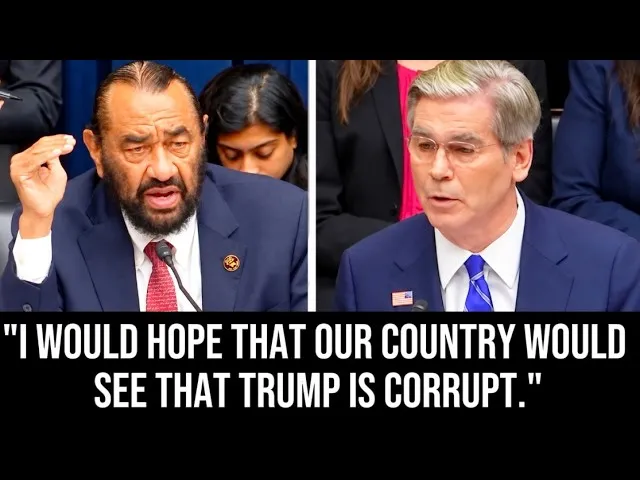
Video: WHOA: Al Green GRILLS Bessent over Trump's meme coin “scam”
Want articles like this for your own video to promote it on YouTube and Google? Order them through the Telegram bot @sat_sit_bot. It writes articles around your video, embeds the video and publishes them on popular niche websites (no ads). Free trial — 50 articles.
· based on the channel Daniel Reed
Key takeaways
- Senator Al Green pressed Treasury Secretary Scott Bessent over the Trump meme coin at a Senate hearing, calling the arrangement a scam.
- Bessent did not defend the token's economics; he framed the matter as outside the Treasury's regulatory remit.
- Meme coins carry no claim on assets, cash flow or governance — value rests entirely on the next buyer.
- Political tokens concentrate risk: insiders and early holders can exit while retail buyers absorb the drop.
- The hearing renewed calls for clearer disclosure rules on tokens tied to public officials.
A meme coin is a cryptocurrency with no underlying business, cash flow or asset backing — its price depends entirely on what the next buyer will pay. That definition sat at the center of a Senate hearing in which Senator Al Green questioned Treasury Secretary Scott Bessent about the Trump meme coin, pressing him on whether a token marketed by a sitting president's family amounts to a scam. Bessent's answers, and the exchanges around them, laid out the core issues any meme coin trader should understand before buying.
What Al Green asked Bessent about the Trump meme coin
Green's line of questioning treated the token as an ethics problem first and a market problem second. He argued that a coin issued in connection with a political figure creates a channel for people seeking influence to transfer money to insiders without the disclosure that normally accompanies a campaign contribution. Bessent's responses stayed technical: he described the Treasury's role as monitoring markets and financial stability, not policing the reputations of individual tokens, and he declined to adopt Green's characterization. The gap between the two positions is the story — one side frames the token as a conflict-of-interest vehicle, the other as a product the market is free to price.
Why meme coins have no floor price
A meme coin's value rests on three things that are not there: no claim on company revenue, no redeemable collateral, and no governance rights. Holders own a token whose only exit is selling it to someone else. That structure produces the pattern seen in almost every political or celebrity token: a sharp launch, a burst of attention, then a long decline as attention moves on. When the supply of new buyers stops, the price does not find a "fair value" — it finds the last bid. Traders who treat these tokens as investments rather than as bets are mispricing the risk.
The concentration problem behind political tokens
Supply distribution decides who wins and who loses. In most celebrity and political launches, a large share of tokens is held by the issuing team, early insiders or affiliated wallets, often disclosed only partially. Those holders can sell into retail demand while public buyers are still arriving. Green's questioning circled this point: when the issuer is a public figure, the informational gap between insiders and ordinary buyers is not just a market feature, it is a governance question. Buyers should check the holder distribution on-chain before anything else — a token where a handful of wallets control most of the supply has a built-in exit risk.
How regulators currently treat meme coins
Bessent's position reflects the existing split in oversight. The Treasury watches for financial-stability and illicit-finance risks; securities law questions sit with the SEC; and tokens that are purely collectible or satirical may fall outside both frameworks. That leaves a gap: a token can be aggressively marketed, tied to a prominent name, and still be nobody's regulatory responsibility in practice. The practical consequence for traders is that recourse after a collapse is close to zero. There is no prospectus, no audited reserve and usually no legal entity to sue.
Common questions traders raise about political meme coins
- Is it a Ponzi scheme? Strictly, a Ponzi pays early investors with money from later ones through a central operator. A meme coin has no promised returns, so it is closer to a greater-fool trade — but the wealth transfer from late buyers to early holders is the same.
- Who is buying? Motives vary: speculation, community participation, and in some cases access or association with the issuer's circle.
- Is the money laundered? Public blockchain records make large flows traceable, which cuts both ways — transparency exists, but so does the ability to route funds through many wallets.
- Can it be shut down? Only if a specific law is broken; unpopularity is not a legal violation.
- What about tax? Gains are taxable in most jurisdictions, and losses on a token that goes to near zero are often harder to document than traders expect.
What this means for your own meme coin exposure
Size positions as if total loss is the base case, not the tail risk. Before buying any token tied to a public figure, check three numbers: the share of supply held by the top ten wallets, the unlock schedule for insider allocations, and the liquidity depth on the main trading pair. If liquidity is thin relative to the market cap, a modest sell order can move the price sharply against you. Treat marketing volume — hearings, press coverage, viral posts — as a signal of attention, not of value, and set an exit before you enter.
Summary
The Senate exchange between Al Green and Scott Bessent clarified what a meme coin is and is not: a speculative token with no asset backing, whose risk is concentrated in insider supply and thin liquidity. The hearing did not produce a new rule, but it made the disclosure gap around political tokens impossible to ignore. Daniel Reed's breakdown of the hearing is a useful record of how the two sides framed the argument. For traders, the takeaway is unchanged: in a market with no floor price, position sizing is the only real risk management.
FAQ
Source: WHOA: Al Green GRILLS Bessent over Trump's meme coin “scam” · Markdown version
Questions & answers
Did the Senate hearing change any rules for meme coins?
No. The exchange between Al Green and Scott Bessent was oversight pressure, not rulemaking. Bessent framed the token as outside the Treasury's direct remit, so no new disclosure or registration requirement came out of the session itself.
Is a political meme coin legally a Ponzi scheme?
Not in the strict legal sense, because no returns are promised and there is no central operator paying old investors with new money. Economically, though, late buyers fund early holders in the same way, and losses fall on whoever buys last.
How can I tell if a meme coin's supply is concentrated?
Check the holder distribution on a block explorer or analytics dashboard. Look at the top ten wallets' share of supply, whether those wallets belong to the team, and the unlock schedule for insider allocations before you buy.
Why do people keep buying tokens tied to politicians?
Motives range from short-term speculation to a sense of participation in a political movement, and in some cases a hope of access to the issuer's circle. Attention-driven buying often continues after the fundamentals — which do not exist — have stopped supporting the price.